-
The data, available for open access through the GBIF platform, have been collected from over ten scientific institutions
-
IberArthro compiles more than one million records representing over 4,600 species from groups such as butterflies, beetles, and bees
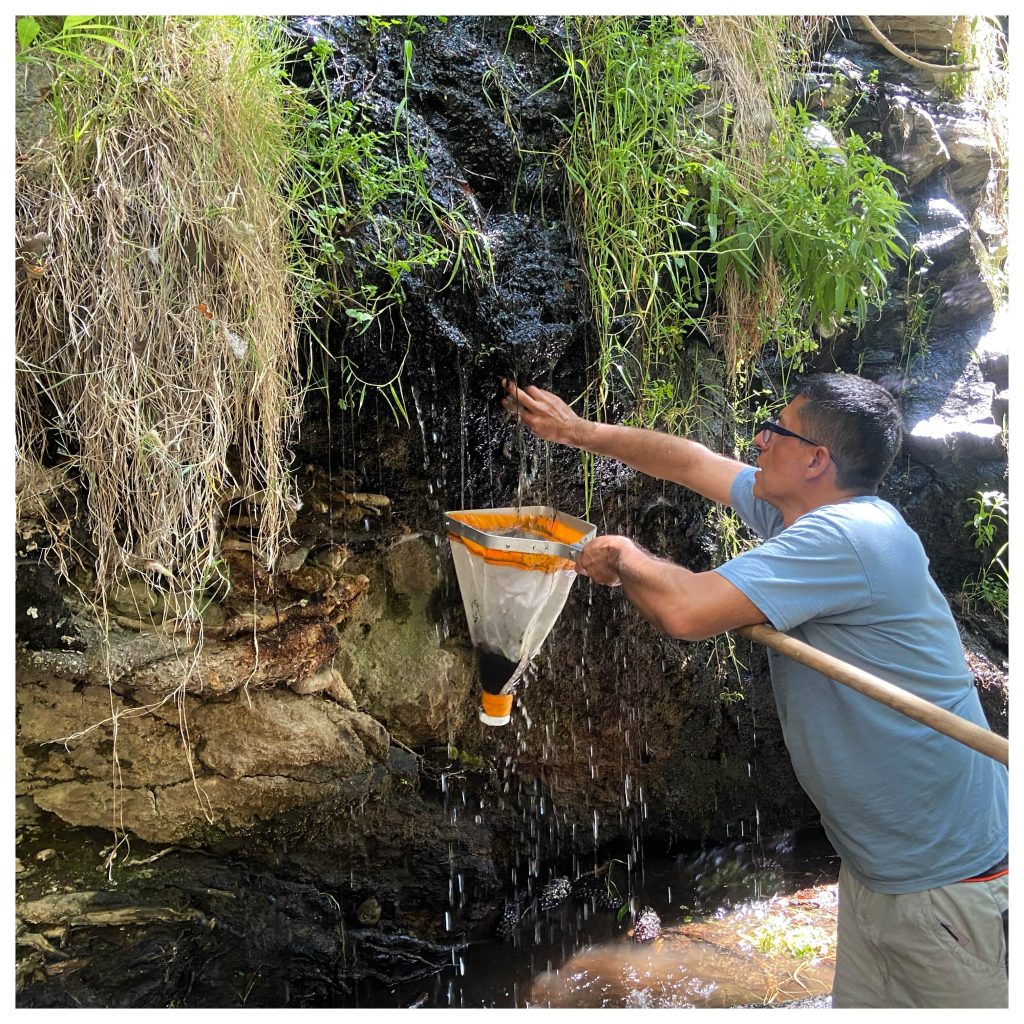
Researcher Raúl Acosta Rivas collects aquatic larvae from the Order Trichoptera. | Jérôme Latron
With 1,006,768 records linked to geographical data and validated by experts in each group, IberArthro is the largest database on the distribution of arthropods in the Iberian Peninsula and the Balearic Islands.
Arthropods support numerous ecosystems, from forests to savannas and wetlands, as they form the base of the food chain, serving as food for many species. Understanding their conservation status and distribution is crucial for establishing conservation measures to protect ecosystems that make life on Earth, including human life, possible. This database has been developed by a team of over ten scientific institutions, including the Institute of Environmental Assessment and Water Research (IDAEA) of the CSIC.
“We are fairly well acquainted with the arthropods that affect agriculture or human health, but many others, smaller and less visible, remain largely unknown. With IberArthro, we want to begin filling that gap by gradually adding more records from groups such as dipterans (insects) or opiliones (arachnids),” explains biologist Raúl Acosta Rivas, a researcher at IDAEA-CSIC.
The information is organised into 10 km² grids covering the entire territory of the Peninsula and the Balearic Islands. Published in the journal Ecosistemas, this database is available for open access and can be consulted through the GBIF platform.
Arthropods include insects (such as lepidopterans), myriapods, arachnids, crustaceans, and other groups. Currently, around 1,300,000 arthropod species are known, representing approximately 80% of all known species in the animal kingdom.
“The Mediterranean basin is a true hotspot for arthropod biodiversity. However, in the Peninsula, we have aquatic insects endemic to high mountains whose existence is threatened by climate change, and we know very little about their morphological and genetic diversity. Therefore, IberArthro is a fundamental tool to better understand the distribution of all arthropod groups and thus support their conservation,” concludes Acosta.
Mañas-Jordá, R. Acosta, A. Ariño, E. Baquero, N. Bonada, D. Galicia, E. García-Barros, A.J. García-Meseguer, E. García-Roselló, M. González, J.M. Lobo, M.J. López-Rodríguez, J. Martínez, A. Millán, V.J. Monserrat, M.L. Munguira, C.E. Prieto, H. Romo, C. Sánchez-Campaña, J.M. Tierno de Figueroa, J.L. Yela, D. Sánchez-Fernández. (2025) IberArthro: A free online database compiling taxonomic and distributional data on Ibero-Balearic arthropods. Ecosistemas. DOI: 10.7818/ECOS.2955