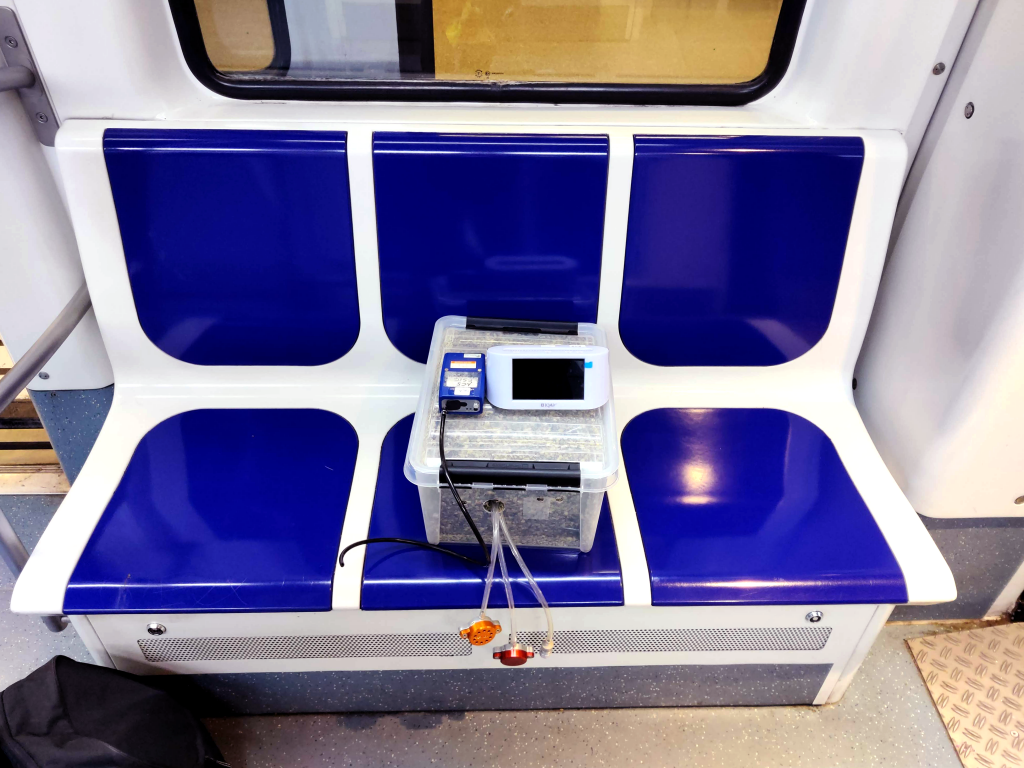
Pumps were used to collect the samples of PM2.5 in different indoor environments, such as the Metro of Barcelona / Aleix Balasch.
Plastic is currently one of the most extensively utilized materials, prevalent not only in packaging, electronic devices, or clothing but also within our homes. In numerous instances, chemical compounds are incorporated to alter their physical or chemical properties, such as organophosphate esters, employed as flame retardants and plasticizers. These compounds may be present in fine airborne particulate matter 2.5 (PM2.5), which indicates the size of the particles, and that can be breathed in and deposited in the respiratory tract, ultimately entering the bloodstream.
Now, an IDAEA-CSIC study, published in Environmental Science and Technology, shows the human daily exposure to organophosphate esters through the inhalation of PM2.5, ingestion and dermal contact of dust in indoor environments, such as homes, workplaces, and means of transport, where people spend most of their daily time. Researchers have identified 16 chemical compounds in indoor environments and assessed their carcinogenic risk.
The concentration of these chemical compounds varies among the analysed indoor areas. While bathroom, kitchen, bedroom, living room, and workplaces samples showed similar levels, the highest concentrations were found in means of transportation, specifically buses, with a median of 56.7 ng/m3, attributed to the plastic material of the vehicles.
“Although the concentrations we found are below the human health risk threshold, some of them are very close to the carcinogenic risk limits”, explains Ethel Eljarrat, IDAEA researcher and main author of the study. “If we take into account the total estimated daily intakes from different plastic sources around us, our exposure could exceed the human health safety limits”, concludes Eljarrat.
Currently, there is no established limit in the legislation, as organophosphate esters are compounds of emerging concern.
“To calculate the safe limits, we have followed the levels established by the US Environmental Protection Agency as a reference”, indicates Aleix Balasch, IDAEA researcher and first author of the work.
Applying the precautionary principle, the authors emphasise the need to reduce the use of certain organophosphate esters, especially those that are causing the highest carcinogenic risk values, given the ubiquity of these chemicals in domestic, work, and transport microenvironments. Such a reduction would translate into a decrease in the estimated daily intake coming from a multiplicity of exposure pathways and likely lead to a safer, less contaminating situation beneficial for human health.
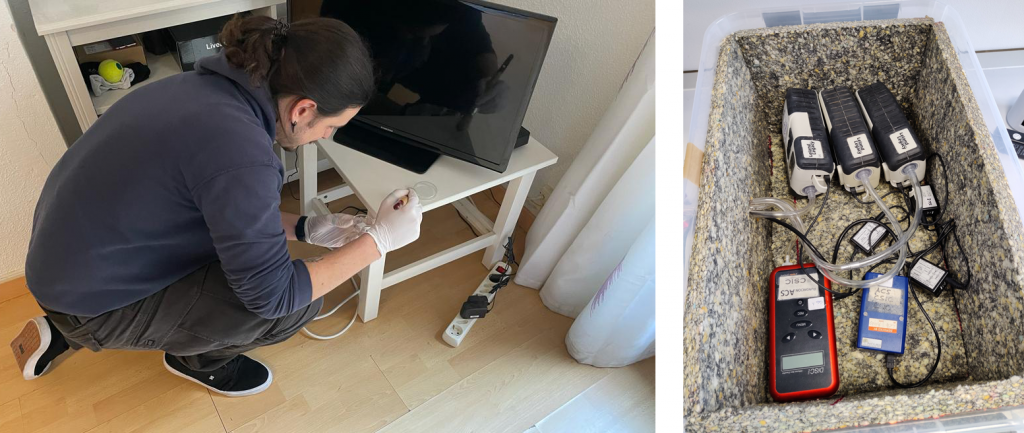
The researcher Aleix Balasch sampling in a living room (left), and the pumps used to sample (right) / Aleix Balasch.
Aleix Blasch, Teresa Moreno, Ethel Eljarrat. Assessment of Daily Exposure to Organophosphate Esters through PM2.5 Inhalation, Dust Ingestion, and Dermal Contact. Environmental Science and Technology, 2023. DOI: 10.1021/acs.est.3c06174

Pumps were used to collect the samples of PM2.5 in different indoor environments, such as the Metro of Barcelona / Aleix Balasch.
Plastic is currently one of the most extensively utilized materials, prevalent not only in packaging, electronic devices, or clothing but also within our homes. In numerous instances, chemical compounds are incorporated to alter their physical or chemical properties, such as organophosphate esters, employed as flame retardants and plasticizers. These compounds may be present in fine airborne particulate matter 2.5 (PM2.5), which indicates the size of the particles, and that can be breathed in and deposited in the respiratory tract, ultimately entering the bloodstream.
Now, an IDAEA-CSIC study, published in Environmental Science and Technology, shows the human daily exposure to organophosphate esters through the inhalation of PM2.5, ingestion and dermal contact of dust in indoor environments, such as homes, workplaces, and means of transport, where people spend most of their daily time. Researchers have identified 16 chemical compounds in indoor environments and assessed their carcinogenic risk.
The concentration of these chemical compounds varies among the analysed indoor areas. While bathroom, kitchen, bedroom, living room, and workplaces samples showed similar levels, the highest concentrations were found in means of transportation, specifically buses, with a median of 56.7 ng/m3, attributed to the plastic material of the vehicles.
“Although the concentrations we found are below the human health risk threshold, some of them are very close to the carcinogenic risk limits”, explains Ethel Eljarrat, IDAEA researcher and main author of the study. “If we take into account the total estimated daily intakes from different plastic sources around us, our exposure could exceed the human health safety limits”, concludes Eljarrat.
Currently, there is no established limit in the legislation, as organophosphate esters are compounds of emerging concern.
“To calculate the safe limits, we have followed the levels established by the US Environmental Protection Agency as a reference”, indicates Aleix Balasch, IDAEA researcher and first author of the work.
Applying the precautionary principle, the authors emphasise the need to reduce the use of certain organophosphate esters, especially those that are causing the highest carcinogenic risk values, given the ubiquity of these chemicals in domestic, work, and transport microenvironments. Such a reduction would translate into a decrease in the estimated daily intake coming from a multiplicity of exposure pathways and likely lead to a safer, less contaminating situation beneficial for human health.

The researcher Aleix Balasch sampling in a living room (left), and the pumps used to sample (right) / Aleix Balasch.
Aleix Blasch, Teresa Moreno, Ethel Eljarrat. Assessment of Daily Exposure to Organophosphate Esters through PM2.5 Inhalation, Dust Ingestion, and Dermal Contact. Environmental Science and Technology, 2023. DOI: 10.1021/acs.est.3c06174