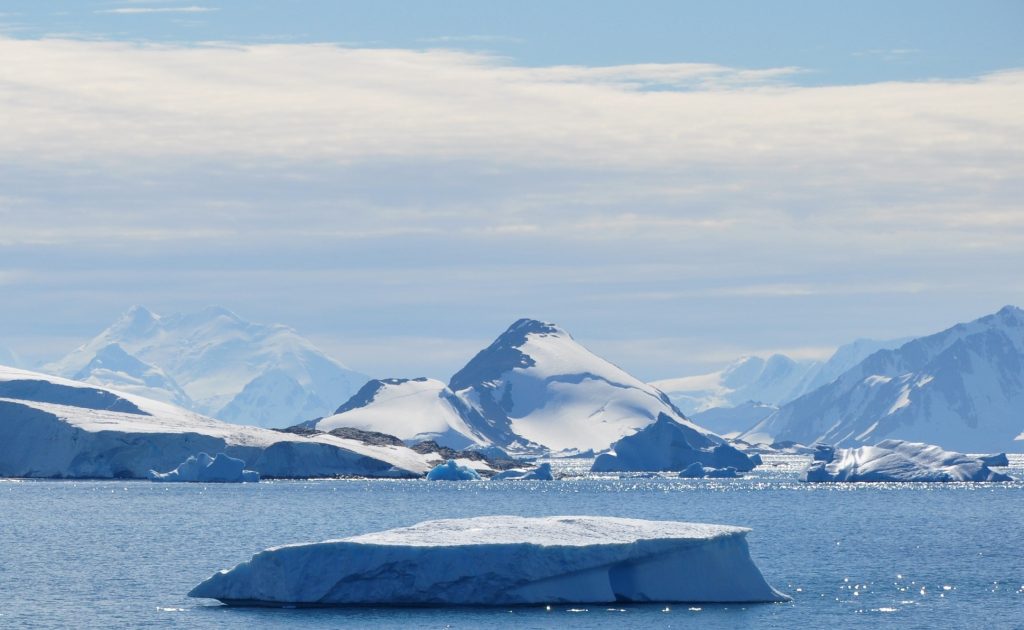
The researchers from the IDAEA Global Change and Genomic Biogeochemistry group along with the Institute of General Organic Chemistry (IQOG-CSIC), coordinate the PANTOC project. This project aimes to study the disturbance of the biogeochemical carbon cycle in the Southern Ocean caused by anthropogenic organic carbon.
Both research centres start today their campaign aboard the Hesperides vessel. The main objective is to collect environmental samples for quantifying different groups of pollutants in the ocean, lakes, air, snow, and krill. Additionally, the researchers will conduct in-situ experiments to analyse potential biodegrading bacteria in the microbial communities of Antarctica.
The fieldwork will be conducted in two stages:
- The first stage, from January 11th until February 1st, will be led by IDAEA researchers Naiara Berrojalbiz, Jon Iriarte, and Mapis Carrillo, and the IQOG researcher Juan Muñoz. They will be stationed at the Juan Carlos I Antarctic Baseon Livingston Island.
- The second part of the campaign will be carried out by researchers Núria Trilla, Isabel Sanz, Clara Serrano, and Jessica Patrone, from February 1st until 24th, at the Gabriel de Castilla Antarctic Base on Deception Island.
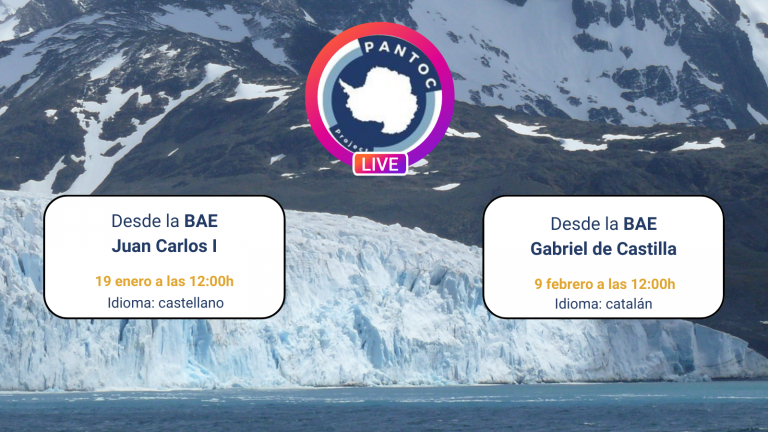
The PANTOC project researchers will actively share their scientific activities via Instagram. They will be live streaming from the Antarctic Bases through their account @pantoc_project to address all questions related to the campaign, Antarctica, and their scientific research. These interactive sessions are intended for primary and secondary students as well as the general public, scheduled for January 19th at 12:00h CET time (in Spanish), and February 9th at 12:00h CET time (in Catalan).

The researchers from the IDAEA Global Change and Genomic Biogeochemistry group along with the Institute of General Organic Chemistry (IQOG-CSIC), coordinate the PANTOC project. This project aimes to study the disturbance of the biogeochemical carbon cycle in the Southern Ocean caused by anthropogenic organic carbon.
Both research centres start today their campaign aboard the Hesperides vessel. The main objective is to collect environmental samples for quantifying different groups of pollutants in the ocean, lakes, air, snow, and krill. Additionally, the researchers will conduct in-situ experiments to analyse potential biodegrading bacteria in the microbial communities of Antarctica.
The fieldwork will be conducted in two stages:
- The first stage, from January 11th until February 1st, will be led by IDAEA researchers Naiara Berrojalbiz, Jon Iriarte, and Mapis Carrillo, and the IQOG researcher Juan Muñoz. They will be stationed at the Juan Carlos I Antarctic Baseon Livingston Island.
- The second part of the campaign will be carried out by researchers Núria Trilla, Isabel Sanz, Clara Serrano, and Jessica Patrone, from February 1st until 24th, at the Gabriel de Castilla Antarctic Base on Deception Island.
The PANTOC project researchers will actively share their scientific activities via Instagram. They will be live streaming from the Antarctic Bases through their account @pantoc_project to address all questions related to the campaign, Antarctica, and their scientific research. These interactive sessions are intended for primary and secondary students as well as the general public, scheduled for January 19th at 12:00h CET time (in Spanish), and February 9th at 12:00h CET time (in Catalan).